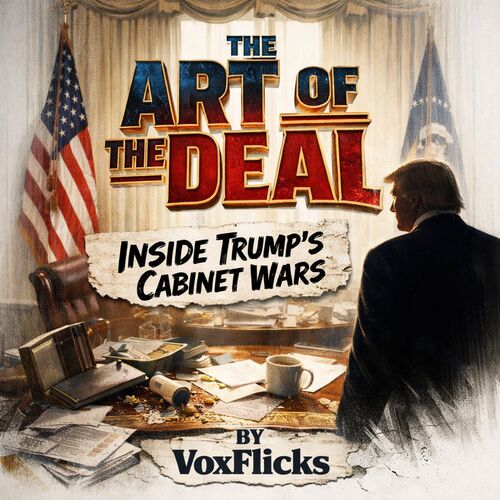
The Art of the Deal: Inside Trump’s Cabinet Wars
A other, cabinet secretary · book audiobook.A other, cabinet secretary · book audiobook.
Chapter 1. ... Cabinet Chaos Begins. ......
The West Wing hummed with tension on that January morning in 2017. ... The air was thick with ambition, whispers of power, and the unspoken question: Who would control the new president? ... Donald Trump had just taken the oath of office, but the real battle was only beginning. ... Inside the Oval Office, the walls seemed to pulse with the weight of expectations. ... This was the moment when the cabinet wars would ignite. ...
The transition had been chaotic from the start. ... Advisors clashed, factions formed, and Trump himself seemed to relish the drama. ... "I like chaos," he had once said. ... And now, as the first cabinet members filed in, that chaos was about to become institutionalized. ...
Jeff Sessions, the Alabama senator, was among the first to arrive. ... A staunch conservative, he had been a loyal ally during the campaign. ... But his loyalty would soon be tested. ... Across the room, Rex Tillerson, the former ExxonMobil CEO, stood stiffly, his corporate demeanor clashing with the raw energy of the new administration. ... He had been handpicked for State, but his lack of political instincts would soon become a liability. ...
Then there was Steve Bannon, the self-styled populist strategist, lurking in the shadows. ... His influence was already seeping into every corner of the White House. ... "We’re at war," he liked to say. ... And in those early days, it felt true. ...
The first major clash came over the National Security Council. ... Trump had expanded its membership, adding figures like Bannon and his chief of staff, Reince Priebus. ... The move sent shockwaves through the intelligence community. ... "This is unprecedented," one career official muttered. ... But in Trump’s White House, precedent was the first thing to go. ...
One of the most explosive moments came over the travel ban. ... The policy was rushed, poorly drafted, and immediately mired in legal chaos. ... Tillerson, who had been briefed on the plan, was caught off guard by its severity. ... "This isn’t how we do things," he told aides. ... But Trump didn’t care about how things were done. ... He cared about results. ... And in his mind, the ban was a win. ...
The infighting only escalated. ... Gary Cohn, the Goldman Sachs alum at the National Economic Council, clashed with Bannon over trade policy. ... "We need to be tough on China," Bannon argued. ... "We need to be smart," Cohn shot back. ... Trump, ever the dealmaker, played them against each other. ... "Let them fight," he’d say. ... "The best ideas will rise to the top." ...
By the summer of 2017, the cabinet was in open revolt. ... Sessions, once a trusted ally, had become a target. ... Trump fumed over his recusal in the Russia investigation. ... "I need a loyal attorney general," he told aides. ... The message was clear: loyalty was the only currency that mattered. ...
The chaos wasn’t just political—it was personal. ... Trump’s tweets became a weapon, turning cabinet members against each other. ... One morning, a senior official would wake up to find their name trending on Twitter. ... By noon, they’d be on the outs. ...
The White House was a pressure cooker, and the cabinet was the fuel. ... Every decision was a battle, every meeting a skirmish. ... And through it all, Trump watched, amused. ... He had built this system. ... And he knew exactly how to keep it burning. ...
The cabinet wars had only just begun. ... But one thing was certain: by the time they ended, the White House—and the country—would never be the same. ......
Chapter 2. ... Loyalty Tests. ......
The West Wing hummed with tension. ... It was 2017, and the new administration was still finding its footing. ... But one thing was clear: Donald Trump demanded absolute loyalty. ... And his cabinet was about to learn that lesson the hard way.
The Oval Office door swung open. ... Aides scurried, phones buzzed, and the weight of the presidency pressed down on every decision. ... Trump leaned back in his chair, fingers steepled. ... "I need people who won’t backstab me," he muttered. ... The message was clear: loyalty wasn’t optional. ... It was the price of admission.
Jeff Sessions, the Attorney General, was the first to feel the heat. ... A staunch conservative, he had been a Trump ally during the campaign. ... But when he recused himself from the Russia investigation, the president saw it as betrayal. ... "You were supposed to protect me," Trump fumed in private. ... The relationship was never the same. ...
Then came Rex Tillerson, the Secretary of State. ... A seasoned oil executive, he brought a corporate mindset to diplomacy. ... But Trump wanted a yes-man, not a strategist. ... "He doesn’t get it," the president grumbled. ... The two clashed over policy, tone, and loyalty. ... Tillerson’s fate was sealed when he reportedly called Trump a "moron" behind closed doors. ... The leak was inevitable. ... The firing, inevitable too. ...
James Mattis, the Defense Secretary, was different. ... A decorated Marine, he commanded respect. ... But even he wasn’t immune. ... When Mattis pushed back on Trump’s impulsive decisions, the president bristled. ... "He’s too independent," Trump told advisors. ... The writing was on the wall. ...
The loyalty tests weren’t just about policy. ... They were about control. ... Trump wanted a cabinet that mirrored his instincts, not challenged them. ... And those who failed the test? ... They were replaced. ... Fast.
The White House became a revolving door. ... Reince Priebus, the first Chief of Staff, lasted just six months. ... Anthony Scaramucci? ... Eleven days. ... The turnover was staggering. ... But for Trump, it was a feature, not a bug. ... "I like turnover," he once said. ... "It keeps people sharp." ...
The cabinet wars weren’t just about personalities. ... They were about power. ... Who could navigate the president’s moods? ... Who could survive the daily chaos? ... And who would be the next to go? ...
The loyalty tests weren’t just for the cabinet. ... They extended to the entire administration. ... Advisors walked on eggshells. ... Allies turned on each other. ... And the president watched. ... Always watching. ...
By 2020, the pattern was clear. ... Trump’s White House was a battlefield. ... And loyalty was the only currency that mattered. ... Those who had it thrived. ... Those who didn’t? ... They were left in the dust. ...
The legacy of these loyalty tests would outlast the administration. ... They reshaped the way Washington worked. ... And they left a question hanging in the air: ... What happens when loyalty becomes the only rule? ...
The answer would define an era. ......
Chapter 3. ... Policy Power Plays. ......
The West Wing hummed with tension. ... The air thick with the scent of coffee and the weight of unspoken agendas. ... Inside the Oval Office, the president leaned back in his chair, fingers steepled. ... The cabinet was at war. ... Not with each other—though that was happening too—but with the man who had appointed them. ...
Donald Trump’s administration was a battleground of competing visions. ... On one side, the populists, the loyalists, the ones who believed in the president’s gut instincts. ... On the other, the pragmatists, the policy wonks, the ones who thought they could steer the ship before it ran aground. ... And in the middle? ... The president himself, a man who thrived on chaos, who saw every disagreement as a negotiation, every compromise as a potential betrayal. ...
Take Secretary of State Rex Tillerson. ... A seasoned oilman, a man who had run ExxonMobil with an iron fist. ... He walked into the State Department believing he could bring order to the chaos. ... But Trump didn’t want order. ... He wanted results. ... Fast. ... And when Tillerson hesitated, when he pushed back, the president turned on him. ... "You’re weak," he’d say. ... "You don’t fight hard enough." ... And then, one day, it was over. ... A tweet. ... Two words. ... "Mike Pompeo will become our new Secretary of State." ... Just like that. ...
But Pompeo wasn’t the only player in this high-stakes game. ... There was Jim Mattis, the general who had earned the nickname "Mad Dog" for his battlefield ferocity. ... He believed in alliances, in diplomacy, in the slow, steady work of statecraft. ... Trump saw him as a relic. ... A man who didn’t understand the art of the deal. ... "We don’t need your wars," the president would say. ... "We need wins." ... And when Mattis resigned, he left behind a memo that would haunt the administration for years. ... A quiet, dignified rebuke. ... A warning. ...
Then there was Jeff Sessions. ... The attorney general who had been one of Trump’s earliest supporters. ... A man who believed in the rule of law, in the Constitution, in the institutions that had shaped America. ... But Trump saw him as a traitor. ... Because Sessions had recused himself from the Russia investigation. ... And that was unforgivable. ... "You left me all alone," the president would say. ... "You abandoned me." ... And when Sessions was fired, it wasn’t just a political move. ... It was personal. ...
The battles weren’t just about personalities. ... They were about policy. ... About trade, about immigration, about foreign policy. ... And in the middle of it all, the president was the ultimate dealmaker. ... He didn’t care about ideology. ... He cared about power. ... About who could deliver. ... About who could make him look good. ...
Take the tax cuts. ... A victory for the conservatives. ... A middle finger to the establishment. ... But then there was the border wall. ... A promise to the base. ... A fight with Congress. ... And in the middle of it all, the cabinet was torn. ... Some believed in the wall. ... Others saw it as a distraction. ... But Trump didn’t care. ... He wanted it built. ... And if they couldn’t make it happen? ... Well, there were always new players waiting in the wings. ...
The White House was a pressure cooker. ... Every meeting, every briefing, every policy debate was a test. ... A test of loyalty. ... A test of strength. ... And the president was always watching. ... Always judging. ... Always ready to strike. ...
By the end of the first term, the cabinet had been reshuffled. ... Some had been fired. ... Some had quit. ... Some had been promoted. ... But one thing was clear. ... The art of the deal wasn’t just about winning. ... It was about survival. ... And in Trump’s White House, survival was a full-time job. ...
The battles weren’t over. ... They never were. ... But the players had changed. ... And the stakes? ... They were higher than ever. ...
The president leaned back in his chair, fingers steepled. ... The West Wing hummed with tension. ... And the game continued. ......
Chapter 4. ... Leaks and Sabotage. ......
The West Wing hummed with the quiet tension of a ticking clock. ... Inside the Oval Office, the air was thick with suspicion. ... A single leak could unravel months of carefully crafted policy. ... And in the Trump White House, leaks were not just a problem—they were a weapon.
It was 2017, and the administration was still finding its footing. ... The cabinet was a powder keg of competing agendas, each secretary vying for the president’s ear. ... But trust was a rare commodity. ... Every meeting, every memo, every whispered conversation was scrutinized. ... Because in this White House, loyalty was currency—and betrayal was a currency, too.
... “You can’t trust anyone.” ... That was the unspoken rule. ... And it was especially true for Steve Bannon, the self-styled strategist who saw himself as the architect of Trump’s populist revolution. ... But even Bannon wasn’t immune to the paranoia. ... His enemies were everywhere—inside the administration, in the press, even within his own inner circle. ... And they were leaking.
The leaks were relentless. ... Anonymous sources feeding stories to The New York Times, The Washington Post, even the Wall Street Journal. ... Every morning, the president would storm into the briefing room, slamming a newspaper onto the table. ... ... “Who the hell is doing this?” ... he’d demand. ... The room would fall silent. ... No one dared answer.
But the leaks weren’t just about policy. ... They were about power. ... And the most damaging leaks came from the highest levels. ... Reince Priebus, the chief of staff, was a frequent target. ... His staffers, his allies, even his own communications team—all suspected of feeding information to the press. ... The White House was a house divided, and the leaks were the cracks in the foundation.
One of the most explosive battles was between Jeff Sessions and Donald Trump. ... The attorney general had been a loyal ally during the campaign, but in the White House, loyalty was a moving target. ... Sessions’ decision to recuse himself from the Russia investigation set off a chain reaction. ... ... “He’s weak,” ... Trump would mutter. ... ... “He’s betrayed me.” ... The leaks about Sessions’ recusal were brutal. ... And the sabotage? Even worse.
Behind closed doors, Sessions’ enemies in the administration worked to isolate him. ... Memos were delayed. ... Meetings were canceled. ... Even his own staff turned against him. ... By the time Trump fired him, it wasn’t a surprise. ... It was inevitable. ...
But Sessions wasn’t the only one. ... Rex Tillerson, the secretary of state, was another casualty of the leaks and sabotage. ... His clashes with the president were legendary. ... ... “He’s a moron,” ... Trump reportedly called him. ... And the leaks about Tillerson’s disdain for the president’s foreign policy were relentless. ... The sabotage was even more insidious. ... His own staffers would leak his private comments, his policy disagreements, even his personal frustrations. ... By the time he was fired, the damage was done. ...
The White House was a battlefield. ... And in the end, the only survivors were those who mastered the art of the deal. ... The ones who knew when to leak, when to sabotage, and when to stay silent. ... Because in Trump’s cabinet wars, the rules were simple: Trust no one. ... And always, always, watch your back. ...
The leaks and sabotage didn’t end with Sessions or Tillerson. ... They became a defining feature of the administration. ... A constant, simmering tension that shaped every decision, every policy, every moment of the Trump presidency. ... And as the years went on, the leaks only grew louder. ... The sabotage only grew bolder. ... Because in the end, the real war wasn’t between the president and his enemies. ... It was between the cabinet members themselves. ... A war for control. ... A war for survival. ...
And in the end, the only winners were the ones who played the game
Chapter 5. ... The Russia Shadow. ......
The Oval Office was quiet that morning, ... the kind of silence that settles over a room when something unsaid hangs in the air. ... Donald Trump sat behind the Resolute Desk, ... his fingers drumming lightly on the surface. ... Outside, the White House press corps buzzed with speculation. ... Inside, the weight of an investigation loomed.
The Russia Shadow. ... It wasn’t just a phrase—it was a presence, ... a specter that followed the administration from day one. ... The 2016 election had been a battleground, ... and now, the fallout was seeping into the highest levels of government. ... The FBI’s counterintelligence probe, ... the congressional hearings, ... the whispers in the halls of power. ... It was everywhere.
And then there was James Comey. ... The former FBI director, ... fired abruptly in May 2017, ... his dismissal a seismic event that sent shockwaves through Washington. ... "You’re fired," Trump had said, ... the words echoing in the public imagination. ... But what came next was even more explosive. ... Comey’s private memos, ... his testimony under oath, ... the accusations of obstruction. ... The Russia investigation wasn’t just about collusion anymore. ... It was about the president himself.
Inside the West Wing, the tension was palpable. ... Reince Priebus, the chief of staff, ... walked the halls like a man bracing for impact. ... "Sir, we need to contain this," he’d say, ... his voice low, ... his words measured. ... But containment was impossible. ... The media was relentless. ... The Democrats were circling. ... And the Republicans? ... They were divided. ... Some stood firm. ... Others wavered. ... The Russia Shadow had a way of exposing fractures.
Then came the Mueller appointment. ... Robert Mueller, ... a man of quiet intensity, ... a prosecutor with a reputation for relentlessness. ... His investigation would define the Trump presidency. ... Interviews, subpoenas, indictments. ... The legal machinery was grinding forward, ... and with it, the sense that something was unraveling.
But the real drama played out in the cabinet rooms. ... Jeff Sessions, the attorney general, ... recused himself from the Russia probe, ... a decision that infuriated Trump. ... "You were supposed to protect me," the president reportedly fumed. ... Sessions, a loyalist, ... now a pariah. ... Rex Tillerson, the secretary of state, ... privately questioned Trump’s fitness for office. ... "He’s a fucking moron," Tillerson allegedly said. ... The leaks, the backstabbing, ... the constant sense that the administration was one misstep away from collapse.
And then there was Jared Kushner. ... The president’s son-in-law, ... ensnared in the investigation, ... his security clearance a point of contention. ... "He’s a liability," one aide whispered. ... But loyalty ran deep. ... Kushner stayed. ... The Russia Shadow didn’t just touch the president. ... It touched his family.
The hearings were a spectacle. ... Testimony after testimony, ... each one a new revelation. ... Michael Flynn, ... the national security advisor, ... pleading guilty. ... Paul Manafort, ... the campaign chairman, ... convicted on multiple counts. ... The dominoes were falling. ... And through it all, Trump raged. ... "Witch hunt," he called it. ... But the shadow grew longer.
By 2020, the impeachment trial had come and gone. ... The Russia investigation had faded from the headlines, ... but not from the record. ... The damage was done. ... The cabinet wars had been fought. ... The loyalties tested. ... And the Russia Shadow? ... It lingered. ... A reminder that power, ... once questioned, ... is never the same.
The events of that era would shape America for years to come. ... A presidency defined by chaos, ... by suspicion, ... by the relentless pursuit of truth. ... And in the end, ... the Russia Shadow was more than an investigation. ... It was a mirror. ... Reflecting the fractures of an administration, ... and a nation, ... forever changed. ......
Chapter 6. ... Firing Frenzy. ......
The West Wing hummed with tension. ... The air thick with whispers, the carpeted halls absorbing the weight of unspoken threats. ... It was 2017, and Donald Trump’s White House was in the grip of a firing frenzy. ... A relentless cycle of loyalty tests, backroom deals, and sudden dismissals. ... The cabinet was a powder keg, and the president’s temper the spark.
The first major casualty was James Comey. ... The FBI director had become a thorn in Trump’s side, his investigation into Russian interference looming like a storm cloud. ... The president’s frustration boiled over during a private dinner. ... "You’re fired," he said, the words hanging in the air like a death sentence. ... Comey later recalled the moment with chilling clarity. ... "The president reached out and touched my arm. ... I thought, This is it."
But Comey’s dismissal was just the beginning. ... The White House became a revolving door of secretaries, each one walking the tightrope of Trump’s unpredictable moods. ... Jeff Sessions, the attorney general, endured months of public humiliation before finally being pushed out. ... "I don’t have the president’s confidence anymore," he admitted, his voice heavy with resignation. ... The president’s tweets were his weapon of choice. ... A single post could end a career. ...
The firings weren’t just personal. ... They were strategic. ... Trump saw the cabinet as a tool, not a team. ... If a secretary resisted his agenda, they were out. ... If they leaked to the press, they were gone. ... If they simply annoyed him, they were history. ... The turnover was unprecedented. ... In four years, the administration cycled through four national security advisors, three chiefs of staff, and two secretaries of state. ...
The most dramatic moment came with the ouster of Rex Tillerson. ... The former ExxonMobil CEO had been a reluctant fit from the start. ... His diplomatic approach clashed with Trump’s transactional style. ... The final straw? A reported expletive-laden rant where Tillerson allegedly called the president a "moron." ... The rumor spread like wildfire. ... Trump, ever the counterpuncher, struck back. ... "Rex Tillerson is out," he announced on Twitter, the news breaking like a thunderclap. ...
But the firings weren’t always clean. ... Some secretaries fought back. ... John Kelly, the former chief of staff, tried to impose order. ... He implemented a system of vetting, of structure. ... But Trump chafed under the constraints. ... "I don’t need your rules," he reportedly snapped. ... Kelly’s reign was short-lived. ... He was replaced by Mick Mulvaney, a loyalist who understood the president’s unspoken demands. ...
The firings had consequences. ... Policy stalls, morale crashes, and a sense of chaos seeped into the halls of power. ... But for Trump, it was all part of the deal. ... He believed in disruption. ... In shaking things up. ... In keeping everyone on their toes. ... The cabinet wars were his way of maintaining control. ...
By 2021, the toll was clear. ... The administration had burned through talent at a staggering rate. ... Some saw it as a sign of weakness. ... Others as a testament to Trump’s ruthless efficiency. ... But one thing was undeniable: the firings had reshaped the government. ... And the echoes of that frenzy would linger long after the last resignation letter was signed. ......
Chapter 7. ... Impeachment Looms. ......
The air in the White House was thick with tension. ... The year was 2019, and the specter of impeachment hung over the West Wing like a storm cloud. ... Inside the Situation Room, senior advisors huddled, their faces etched with worry. ... The House had just launched an inquiry. ... The stakes? Nothing less than the presidency itself.
President Trump sat at the Resolute Desk, his jaw set. ... "This is a witch hunt," he muttered, his voice low but sharp. ... Around him, his cabinet members exchanged glances. ... Some saw opportunity. ... Others, peril.
Secretary of State Mike Pompeo leaned forward, his tone measured. ... "Mr. President, we need a strategy. ... The Democrats are moving fast. ... We can’t afford to be reactive."
Chief of Staff Mick Mulvaney cut in, his words clipped. ... "We hit back hard. ... Full transparency. ... Let’s put it all on the table."
But Attorney General Bill Barr shook his head slowly. ... "No. ... We play this carefully. ... The legal ground is shaky. ... We need to control the narrative."
Outside, the press corps swarmed. ... Cameras flashed. ... Reporters shouted questions. ... "Will you testify, Mr. President?" ... "Is this the end of your administration?"
Inside, the cabinet was fractured. ... Secretary of Defense Mark Esper stayed silent, his expression unreadable. ... He had seen this play out before. ... In other administrations. ... In other wars.
National Security Advisor Robert O’Brien spoke up, his voice steady. ... "We focus on policy. ... Let the lawyers handle the rest. ... The American people don’t care about process. ... They care about results."
But the results were slipping away. ... The House was compiling evidence. ... Witnesses were testifying. ... The Senate loomed as the final battleground.
Senator Lindsey Graham, a close ally, called the president late one night. ... "Sir, you’ve got to fight this. ... You can’t let them take you down without a fight."
Trump’s response was immediate. ... "I’m not going anywhere. ... They’ll regret this. ... They’ll all regret it."
The impeachment hearings dragged on. ... The nation watched, divided. ... Some saw justice. ... Others, a coup.
Inside the White House, the mood grew darker. ... Press Secretary Stephanie Grisham fielded relentless questions. ... "The president is focused on the American people. ... This is a distraction. ... A political stunt."
But the distraction was everywhere. ... On cable news. ... On social media. ... In the halls of Congress.
Then, the vote. ... The House impeached. ... The Senate trial began. ... The cabinet watched, bracing for impact.
Senator Mitch McConnell, the Republican leader, had already made his move. ... He had coordinated with the White House. ... The trial would be short. ... The outcome, predetermined.
And so it was. ... The Senate acquitted. ... The president survived. ... But the scars remained.
In the aftermath, the cabinet regrouped. ... Some left. ... Others stayed. ... The wars within the administration had only just begun.
The impeachment had been a test. ... And the White House had passed. ... But the cost? ... That was still being counted.
As the dust settled, one thing was clear. ... The battles were far from over. ... The art of the deal had just taken a brutal turn. ......
Chapter 8. ... Final Showdown. ......
The air in the Oval Office was thick with tension. ... The year was 2020, and the walls of power were closing in. ... Donald Trump, the man who had promised to drain the swamp, now found himself surrounded by factions—each pulling in a different direction. ... The cabinet wars had reached their climax, and the fate of the nation hung in the balance.
It was a battle of wills, a clash of ideologies, and a test of loyalty. ... The president’s inner circle was fractured. ... On one side, the hardliners—Steve Bannon, Stephen Miller—pushing for a nationalist agenda, a vision of America closed off to the world. ... On the other, the moderates—Mick Mulvaney, Gary Cohn—trying to steer the administration toward stability, toward deals that could actually get done. ... And then there were the wild cards—Jeff Sessions, James Mattis—men who had once been trusted but now found themselves on the outs.
The president himself was unpredictable. ... One moment, he would demand loyalty, the next, he would turn on his closest allies. ... "You’re either with me or against me," he would say, his voice sharp with accusation. ... And in the halls of the West Wing, the whispers grew louder. ... Who would be next? ... Who would survive the final purge?
The breaking point came in the summer of 2020. ... The pandemic raged, the economy teetered, and the election loomed. ... Trump was desperate for a win, any win. ... He turned to his cabinet, demanding results. ... But the infighting had paralyzed the administration. ... The National Security Council was in chaos. ... The Treasury Department was at war with itself. ... And the White House staff? ... They were exhausted, demoralized, and divided.
Then came the final showdown. ... A meeting in the Situation Room, the air heavy with unspoken accusations. ... The president sat at the head of the table, his expression unreadable. ... Around him, his top advisors—some still loyal, others already plotting their exits. ... The topic? ... A controversial executive order, one that could reshape the country’s foreign policy. ... But the real battle was over control. ... Who would dictate the terms of the Trump presidency? ... Who would have the president’s ear?
The debate was fierce. ... "This is the right move," one advisor insisted. ... "It’s what the base wants." ... But another shook his head. ... "It’s a disaster. ... It’ll backfire." ... The president listened, his fingers drumming on the table. ... Then, without warning, he made his decision. ... "Do it," he said. ... The room fell silent. ... The die was cast.
The fallout was immediate. ... Resignations followed. ... Leaks to the press. ... And behind the scenes, the real war—one of reputations, of legacies, of who would be remembered as the architect of Trump’s success or the architect of his downfall. ... The cabinet wars had reached their endgame. ... And in the wreckage, one truth emerged: ... In the Trump White House, loyalty was a currency that could be spent in an instant. ... And power? ... Power was the only thing that mattered.
The final days of the administration were a blur of chaos and recrimination. ... The president, increasingly isolated, lashed out at those he saw as betrayers. ... The cabinet members who had once been his closest confidants now found themselves on the outside looking in. ... And the nation watched, as the drama played out in real time. ... A presidency that had promised to disrupt the status quo had, in the end, been consumed by the very forces it sought to defeat.
As the clock ticked down to January 20, 2021, the question lingered: ... What had it all been for? ... The battles, the betrayals, the relentless pursuit of power. ... Had it changed anything? ... Or had it only deepened the divisions that had brought Trump to office in the first place?
The answer, perhaps, would be written in the history books. ... But for those who had been in the room, in the thick of the fight, the scars would remain. ... The final showdown had been fought. ... And in the end, the only real winner was the chaos itself. ......
Chapter 9. ... Legacy at Stake. ......
The Oval Office was never quiet. ... Even in the stillest moments, the weight of history pressed against the walls. ... In 2020, as the pandemic raged and protests erupted, the men and women inside the West Wing were fighting a different kind of war. ... A war for legacy. ...
The cabinet was fracturing. ... Secretary of State Mike Pompeo, once a loyalist, now maneuvered for the future. ... His private meetings with allies, his carefully crafted speeches—each move calculated. ... The president noticed. ... And in the White House, noticing was the first step toward suspicion. ...
"Mike, you’re playing a dangerous game," Trump muttered to an aide one evening. ... The words hung in the air, heavy with implication. ... Pompeo wasn’t the only one. ... Attorney General William Barr, once the president’s shield, now faced scrutiny. ... His public statements, his legal opinions—all under a microscope. ... The question wasn’t just loyalty anymore. ... It was survival. ...
The White House was a pressure cooker. ... Every decision, every leak, every whispered conversation could tip the balance. ... The president’s inner circle tightened. ... Chief of Staff Mark Meadows, a trusted confidant, became the gatekeeper. ... His office was a fortress. ... But even he couldn’t control the whispers. ...
"Sir, we need to address the election," Meadows said one afternoon. ... The president’s face darkened. ... "We’re not losing," he snapped. ... But the numbers told a different story. ... And in the cabinet, the cracks were widening. ...
Defense Secretary Mark Esper, once a steady hand, now found himself isolated. ... His refusal to deploy troops against protesters had been a breaking point. ... The president’s trust was fragile. ... And in the final months of the administration, trust was the only currency that mattered. ...
The legacy at stake wasn’t just Trump’s. ... It was the legacy of the men and women who had shaped his presidency. ... Would they be remembered as loyalists? ... Or as opportunists? ... The answer would be written in the chaos of the transition. ...
The final days were a blur. ... Phone calls at 3 a.m., last-minute pardons, frantic meetings. ... The cabinet members who had once stood united were now scattered. ... Some clinging to power, others already looking ahead. ...
"History will judge us," Pompeo said in a rare moment of reflection. ... But history wasn’t written in the Oval Office. ... It was written in the streets, in the courts, in the hearts of the people. ... And as the clock ticked down, the cabinet’s legacy hung in the balance. ...
The last meeting was tense. ... The president, surrounded by his closest advisors, spoke in clipped sentences. ... "You’ve all done good work," he said. ... But the words rang hollow. ... Because in the end, legacy wasn’t about what was said. ... It was about what was done. ...
And as the doors of the White House closed behind them, the cabinet members walked into a future they had helped create. ... A future where their names would be forever linked to the most turbulent presidency in modern history. ...
The legacy was at stake. ... And the verdict was still out. ......
Chapter 10. ... Aftermath Revealed. ......
The West Wing hummed with an electric tension, the kind that crackled beneath the surface of every whispered conversation. ... It was the morning after the storm, and the air smelled of burnt ambition and unspoken betrayals. ... The cabinet members had survived the first year of Trump’s presidency, but the scars were fresh, the alliances fragile. ... This was the aftermath—raw, unfiltered, and still unfolding.
Inside the Oval Office, the president sat behind the Resolute Desk, his fingers drumming impatiently. ... The walls, lined with portraits of past commanders-in-chief, seemed to watch as he leaned forward, his voice low and deliberate. ... "We’ve got a problem," he said. ... "And it’s not going away." ... The words hung in the air, heavy with implication. ... Outside, the press corps buzzed like a hive of angry bees, sensing blood in the water.
Across the hall, Secretary of State Rex Tillerson stood in his office, staring at the phone. ... He had just hung up with the president, the conversation terse, the subtext unmistakable. ... "You’re either with me or against me," Trump had said. ... Tillerson exhaled slowly, the weight of the decision pressing down. ... He had spent months trying to navigate the president’s mercurial temperament, but now the cracks were showing. ... The question wasn’t if he would leave—it was when.
Meanwhile, in the Situation Room, National Security Advisor H.R. McMaster huddled with his team. ... The room was a fortress of classified documents and tense silence. ... The president’s latest foreign policy gambit had backfired spectacularly, and now the fallout was landing on his desk. ... McMaster’s jaw tightened as he reviewed the intelligence reports. ... "This is a mess," he muttered. ... The men around him nodded, their faces grim. ... They had all seen this play out before—loyalty tested, trust eroded, and the president’s instincts leading them down a path of no return.
Back in the Oval Office, the door swung open abruptly. ... Steve Bannon strode in, his eyes sharp, his posture radiating confidence. ... He didn’t need to say a word—his presence alone was a statement. ... The president looked up, his expression unreadable. ... "You wanted to see me?" Bannon asked, his voice smooth. ... Trump leaned back in his chair, studying him. ... "I need you to handle something," he said. ... "There’s a leak in the cabinet. ... Find it. ... And fix it." ... Bannon’s lips curled into a faint smile. ... He knew exactly what that meant.
Outside, the White House press corps swarmed like vultures, their microphones thrust forward. ... "Is there a shake-up coming?" one reporter shouted. ... "Can you confirm any resignations?" another called. ... The press secretary, Sarah Huckabee Sanders, stood at the podium, her expression carefully neutral. ... "The president is focused on his agenda," she said. ... "Any personnel decisions will be announced in due time." ... But the reporters weren’t fooled. ... They had seen the signs before—the sudden departures, the whispered rumors, the way the president’s tone shifted when certain names were mentioned.
In the halls of the West Wing, the atmosphere was thick with paranoia. ... Staffers exchanged glances, their voices dropping to hushed tones. ... "Did you hear about Tillerson?" one aide whispered. ... "He’s a dead man walking," another replied. ... The walls had ears, and everyone knew it. ... The president’s trust was a fragile thing, and once broken, it was nearly impossible to repair.
By the end of the day, the first domino had fallen. ... Rex Tillerson’s resignation letter was leaked to the press, the words cold and clinical. ... "I appreciate the opportunity to serve," it read. ... But the subtext was clear—he had been pushed out. ... The president, when asked for comment, simply shrugged. ... "Rex wanted to retire," he said. ... "He’s a good man." ... But the truth was far more complicated.
As the sun set over the White House, the aftermath of the cabinet wars settled in like a heavy fog. ... The players had been reshuffled, the alliances redrawn. ... But the game was far from over. ... The president’s next move would determine the fate of his
Select a chapter to view the transcript.